
Anxiety is a common issue in dogs, with studies suggesting that up to 75% show signs of stress-related behaviour. Just like humans, anxiety can be triggered by a range of factors, from being left alone to loud noises or unfamiliar environments.
If you’re concerned your dog might be struggling, here are some common signs to look out for, along with simple ways to help them feel calmer and more secure. Remember, every dog is different, so it’s important to find what works best for yours.
Signs Your Dog May Be Anxious
Recognising your dog’s body language and understanding potential triggers can make a big difference in helping them feel supported. However, anxiety isn’t always easy to spot, and some of the earliest signs can be subtle.
Subtle signs to watch for
- Turning their head away or avoiding eye contact
- Lip licking or yawning when they’re not tired
- Slowing down or hesitating
- Lifting a paw or holding their body low
These behaviours often appear when your dog is trying to avoid conflict or create space.
More obvious signs of anxiety
If your dog is feeling overwhelmed, their behaviour may become more noticeable:
- Shaking or trembling
- Panting or pacing
- Whining or barking more than usual
- Hiding or trying to escape
Some dogs may also become destructive or unsettled, especially when left alone.
Changes in behaviour
You might also notice shifts in routine, such as:
- Becoming clingier than usual
- Losing interest in food or play
- Finding it difficult to follow familiar commands, like “sit”
How to Support an Anxious Dog
There are plenty of simple ways to help your dog feel calmer in their daily life.
Create a safe haven
Give your dog a quiet, comfortable space where they can retreat, such as a cosy bed or den-like area with their favourite blanket and toys.
Use enrichment to keep their mind busy
Activities like lick mats, chew toys, puzzle feeders or scent games provide positive focus and encourage calm behaviour.
Stick to a consistent routine
Regular feeding times, walks and rest periods can help your dog feel more secure and reduce uncertainty.
Provide reassurance
For many dogs, comfort comes from simply having you nearby. Staying calm, speaking gently, and letting your dog come to you can help them feel safe.
Speak to your vet
If you’re concerned your dog may be experiencing severe anxiety, your vet can check for underlying issues, refer you to a behaviourist, and advise on treatment if needed.
Help Them Feel Comfortable When Left Alone
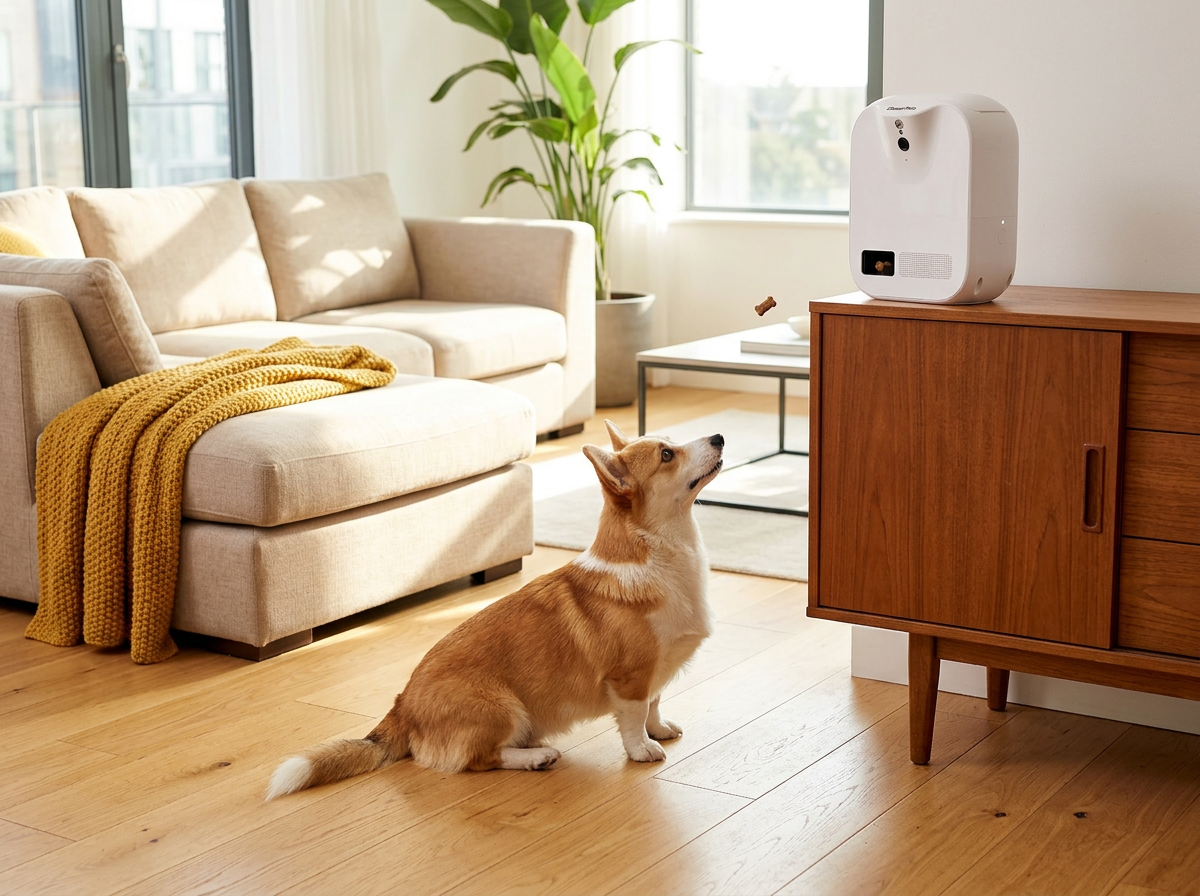
Products like the TreatView Pet Camera and Treat Dispenser can help support your dog when they’re home alone. With a 130° field of view and two-way audio, you can check in, speak to, and comfort your pet from anywhere.
Hearing your voice can be reassuring, while the ability to dispense treats offers a positive distraction and keeps them engaged. Ideal for dogs with separation anxiety, TreatView allows you to monitor behaviour in real time and encourage calm, positive moments.
If you have concerns about your dog’s wellbeing or would like more information, trusted sources such as Dogs Trust and Blue Cross offer helpful advice. Alternatively, speak to your vet for further support.