
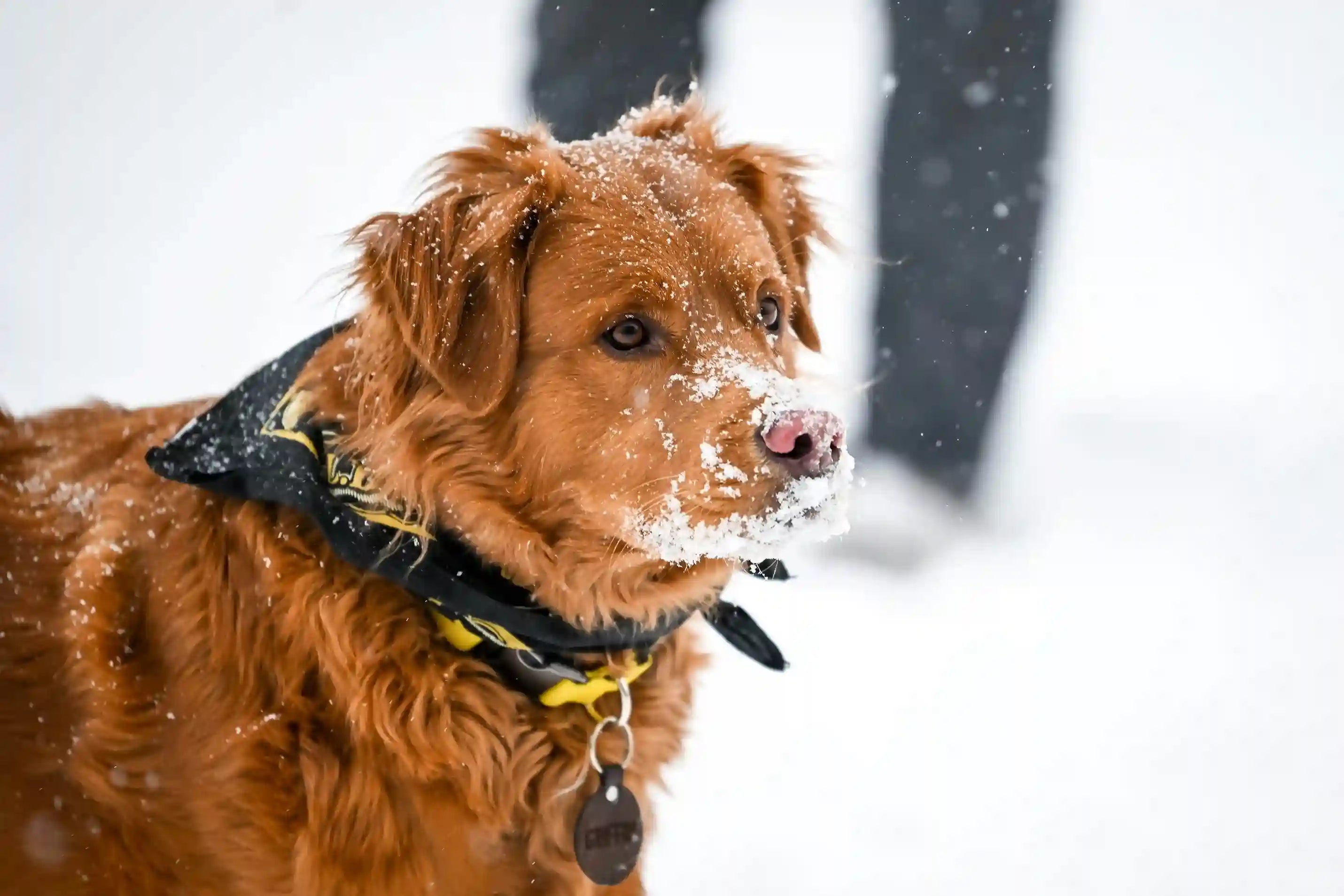
Your dog will be as excited as ever to go on walks when winter finally arrives. However, it’s important to make sure that your pooch is well looked after as the weather gets chilly. Though your dog may love playing in the snow, the colder seasons mean that the weather can be unpleasant and even harmful to their health when it’s too cold. If you’ve been wondering ‘what temperature is too cold to walk a dog’, we’ve got plenty of tips below to keep your winter walkies both safe and fun.
How cold is too cold to walk a dog?
As a general rule, if the weather outside is too cold for you, it’s too cold for your dog. However, different dogs will respond to low temperatures in different ways, so it’s important to plan your walks accordingly. If you’re wondering ‘when is it too cold to walk your dog’, you can find out the recommendations for various low temperatures for your dog below:
At 0°C to -4°C
Between 0°C to -4°C, many dogs will be able to tolerate the temperature. Younger, elderly, smaller, and short-haired dogs will be more susceptible to a chill. If your dog falls under any of these categories, it’s best to avoid walking at these temperatures where possible.
At -5°C to -9°C
Between these temperatures, medium- and large-sized dogs can tolerate the colder temperatures somewhat. However, it is generally recommended to avoid walks between these temperatures, as they can pose health risks to your dog.
Below -10°C
In answer to the question ‘what temperature is too cold to walk a dog’, no matter what type of dog you have, you shouldn’t walk your dog when temperatures are below -10°C. These temperatures are harmful to all dogs' health, so walks should be avoided during these times.
What problems to watch out for
When taking your dog out for a walk in winter weather, several problems can occur in the cold. The most common things that you should keep an eye out for are:
Cracked or dry paw pads
In winter, the cold air and frozen ground reduce moisture, meaning that your dog’s paws will be more fragile and can become dry or cracked after a walk.
Ice balls between the toes
If your dog has longer fur, this can collect compacted snow during your walk. The buildup of this can become painful for them and also increases the risk of frostbite.
Chemical irritants
Along your usual walking paths, you may notice grit, salt, or de-icers have been applied. These can cause burning and dryness on your dog’s paws, so take care to avoid them.
Frostbite
Just like humans, dogs can be susceptible to frostbite in particularly cold temperatures, with their paws, ears, and tails being vulnerable areas. If you notice that your dog has pale, cold skin that becomes darker or red afterwards, you should contact your vet for advice, as this can be a sign.
How to protect your dog during a winter walk
All of the above risks may sound concerning, but they can generally be avoided by giving your dog some extra protection and skipping walks in especially cold temperatures. To keep your dog safe and protected on colder strolls, we recommend:
Protecting your dog’s paws
As your pooch’s paws are sensitive to snow, ice, and de-icing treatments along their usual walk, giving them extra protection is the best way to prevent many issues.
A popular option is to apply some paw balm or wax to your dog’s paws, as these will provide the extra protective barrier they need in winter. This is best applied both before and after you go for a walk, as this helps to prevent paws from cracking.
An alternative to this (that is also pretty cute) is to use dog boots. Not all dogs may take to these, but they do a great job at keeping your pup’s paws warm and protecting against anything that could irritate them at the same time.
In addition, to prevent the problem of compacted snow building up between your dog's paws, it’s best to give their paw hair a trim during this time to reduce the risk.
Using a coat
A great way of keeping your dog warm and protected in winter is to wrap them up in a coat. This is an especially worthwhile choice for slimmer dogs and dogs with thinner coats. However, you should avoid putting a coat on furrier dogs, as this can prevent their fur from working as natural insulation by pushing out air that’s already trapped in their coat for warmth.
Providing warm drinking water
Keeping your dog hydrated during any walk is always important, though keeping them both hydrated and warm during winter walks is essential. Having lukewarm water for your dog to drink on your winter walk will be much more appealing to them than icy cold water and will be easier on their stomach, too. Our Dog Mate Pet Water Bottle is the ideal choice for this, as its double-wall insulation can keep your dog’s water warm all through your walk.
Sticking to well-maintained routes
You may have to alter your usual route slightly if it is likely to be harsher on your dog in the colder months. It’s best to stick to smooth pavements that are free of ice and snow to be kinder to your pup’s paws. This means avoiding rural paths that are likely to be frozen up, while also steering clear of heavily gritted paths that can irritate paws.
Rinsing paws
Along your walk, your dog will likely have collected some grit, road salt, small stones, and other things that could irritate their paws or their mouth if they lick them. Therefore, you should take care to rinse or wipe your dog’s paws clean after a walk to get rid of all of these nasties.
When to head home
However cold it may be on your walk, there will be some clear signs from your dog that they aren’t doing too well. If you see any of these signs, it’s best to head home and get your dog wrapped up warm:
-
Lifting their paws repeatedly
-
Whining or slowing down
-
Shaking excessively
-
Licking or biting their paws
-
Showing stiffness or reluctance to move
-
Looking for warmth
Alternatives to a cold walk
If you’ve decided that it’s too cold to take your four-legged friend on their usual walk (much to their disappointment, we’re sure), there are still plenty of ways you can allow your dog to use up their energy and keep them active indoors. Some examples you can try out include:
-
Teaching your dog some new tricks
-
Playing fetch, tug, or hide and seek
-
Heading to an indoor dog park
-
Creating an indoor obstacle course
By trying out these, you can keep your dog safe, mentally stimulated, and tired even when the weather is at its worst!
Innovative pet products at Closer Pets
Now that you know how cold is too cold to walk a dog, you can keep your dog well protected in the cold and plan their walks accordingly to keep them happy and healthy this winter!
To make looking after your pup even easier in winter and all year round, you can find many convenient dog products at Closer Pets. These include our automatic dog feeders, dog water fountains, and dog doors, which are all designed with thoughtful, advanced features to keep your dog well cared for with ease.
If you want to find out more about any of our products or to ask which is right for you and your dog, be sure to get in touch with us. A member of our team will be more than happy to help you out!