
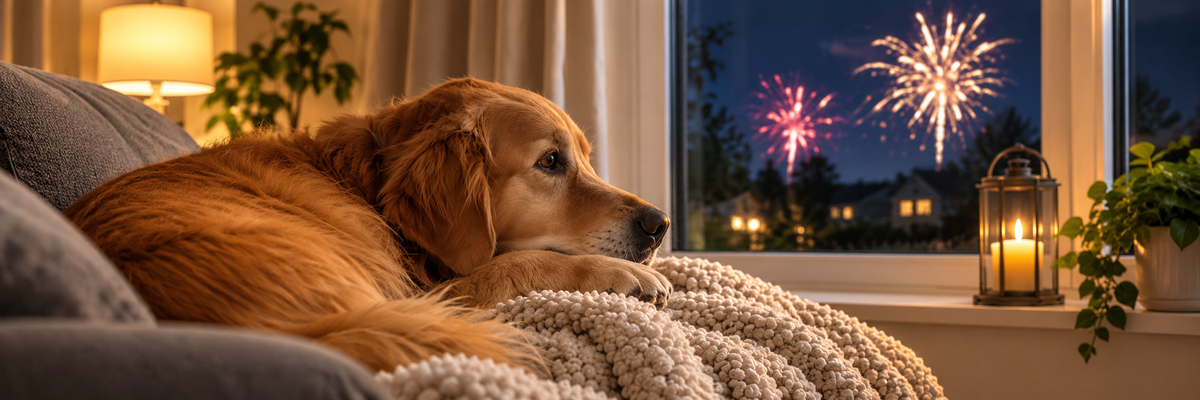
From loud bangs and sudden flashes to unfamiliar sights and smells, Bonfire Night can be an unsettling experience for our four-legged friends.
While some dogs take fireworks in their stride, others can become frightened or anxious, making even familiar surroundings feel less secure.
Although we can't prevent the fireworks, there are plenty of simple steps we can take to help our pets feel safer and more comfortable. Here are eight ways to prepare for Bonfire Night.
1. Plan walks around the fireworks
Loud noises and flashing lights can startle even normally confident dogs, so plan walks during daylight hours, before fireworks are likely to begin. Once fireworks start, avoid taking your dog outside unnecessarily and never force them to go out if they're reluctant, even for a toilet break. Where possible, avoid leaving them home alone and make sure someone familiar is there to provide reassurance.
2. Check identification and microchip details
Even the calmest dogs can panic when startled by fireworks, sometimes attempting to escape. Before Bonfire Night, check that your dog's ID tag is secure and their microchip contact details are up to date, so you can be reunited quickly should they manage to get out.
3. Create a safe, comfortable retreat
A quiet, familiar space away from the activity outside can help your dog feel more secure. Try creating a cosy den by draping a thick blanket over a table or open crate, adding their favourite bed, blankets and toys to make it inviting. Keep fresh water nearby, ensure there's adequate ventilation and allow your dog to come and go freely.
4. Reduce noise and flashes
Closing curtains and blinds can help block out sudden flashes, while keeping lights on makes changes in brightness less noticeable. Music or television at a comfortable volume can also help soften the impact of fireworks. Classical music or gentle, steady rhythms may be soothing for some dogs, although familiar sounds are often the best place to start.
5. Keep them happily occupied
A favourite activity can provide a welcome distraction from unfamiliar noises. Puzzle feeders, lick mats, stuffed Kongs and long-lasting chews offer mental stimulation and give your dog something enjoyable to focus on. Try introducing these before fireworks begin, when your dog is more likely to be relaxed and receptive. If they're too frightened to engage, don't force them. Simply allow them to settle wherever they feel most comfortable.
6. Consider calming support in advance
If your dog has struggled with fireworks in the past, it's worth speaking to your vet well before Bonfire Night. They can advise on suitable calming aids, behavioural support and, where necessary, medication to help manage more significant anxiety.
7. Stay calm and avoid telling them off
Firework anxiety can cause dogs to behave differently. They may pace, bark, hide, become unusually clingy or even have accidents indoors. However unexpected their behaviour might seem, avoid raising your voice or telling them off, as this can increase their distress. Instead, remain calm and reassuring, giving them the space and attention they need.
8. Recognise your dog's individual needs
Every dog responds differently to fireworks, and what helps one may not work for another. Some prefer to hide somewhere quiet, while others seek comfort and companionship. Pay attention to their behaviour and let them guide you. If their anxiety is severe or persistent, seek veterinary advice about additional support.
Helping your dog through Bonfire Night
Above all, remember that every dog experiences fireworks differently. By recognising the signs of anxiety and responding to their individual needs, you can help make Bonfire Night a more comfortable experience for your four-legged friend.