
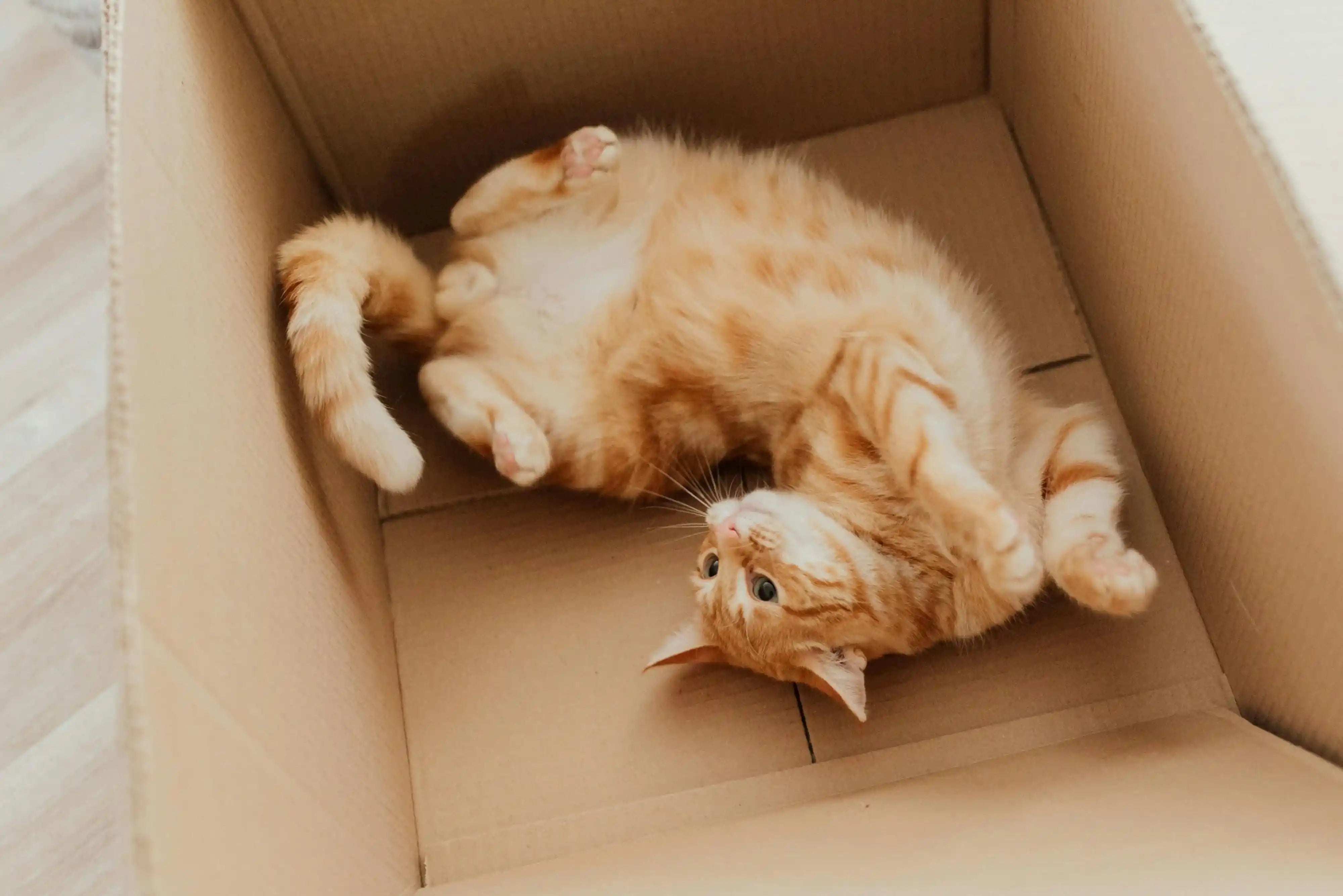
Moving house can be an exciting time for the family, though your cat may be a little cautious of the process. As you may know, cats are big fans of routine and like what they know, so a big change in environment can cause them to be a little anxious. However, we have many tips below on cats and moving home to help make your move a purrfect transition. If you’re soon going to be introducing your cat into a new home, our blog below contains all of our best advice to keep them happy and comfortable during this time.
Before Moving
Before moving house with a cat, they may realise there’s a big change coming with all of the boxes around the home. As a result, it’s best to start making efforts early to make the transition as comfortable as possible for your feline companion.
Sticking to Routine
While you may feel a little all over the place while getting everything sorted, an important step is to try to stick to your cat’s usual feeding and rest routines. Cats like routines, as they give them a sense of security, so sticking to these as best you can is important. An automatic cat feeder can be especially helpful in this regard, as it can be set to feed your cat at their preferred times, even if it slips your mind while you’re getting everything prepared.
Creating a Safe Space
You should set up a safe space for your cat while your home is topsy-turvy, as this will give them a comfortable environment to retreat to if they feel things are a little hectic. Create a quiet room for your cat with all of their essentials, such as their bed, food, water, toys, and litter tray, as this will help to make the move that much smoother.
Using a Travel Carrier
At some stage, you will need to use a travel carrier when thinking about cats and moving home. As your cat may associate their carrier with trips to the vet or the cattery, it can help to get your cat familiarised with it to make things easier on moving day. Leave your carrier out for a few weeks before you move so that they can fully investigate it. You can also make it more appealing by putting some treats or toys inside, or using a pheromone spray.
Updating Microchip Details
During the hustle and bustle of moving out, it can be easy to lose track of your cat, during which time they could sneak out. There’s a chance a similar situation could occur when moving in, so it’s worthwhile to ensure your cat’s microchip contact details are kept up to date in case they are needed.
During Moving
On the day of your move, you should aim to make your cat feel as comfortable as possible to make the transition easier by considering our advice below.
Transporting Your Cat
When moving day arrives, you’ll be using your cat carrier to move your cat from place to place. Make sure to line it with one of their favourite blankets, as this will provide them with some comfort and familiarity. During the journey, you should make sure they have regular access to water and that they are kept in a shady spot if it’s a particularly warm day. If your cat has experience of being travel sick, it’s best not to feed them for at least four hours before the journey.
Using a Cattery
Concerning cats and moving home, some owners may prefer to keep their cat in a cattery during the process. This is entirely down to preference, though it may be a worthwhile option if you feel that the busyness of the move could be too stressful for them.
After the Move
When you arrive at your new home and you and your cat are settling in, it’s important to make your cat feel as comfortable as possible and introduce them to everything slowly.
Setting Up Their Own Room
Similarly to how you will have done before moving out, it’s also preferable for your cat if they feel that they have a secure space when first arriving in their new home. Set it up with all of their essentials as before (bed, food, water, toys, and litter tray) and let them get used to this room first. As cats can tend to drink less when they’re stressed, using a cat water fountain can also help to make sure they’re drinking enough water as they settle in.
Once they feel more comfortable, you can start allowing them to explore the rest of the house.
Marking Their Scent
Your and your cat's new home will smell brand new to your feline friend, which may make them cautious. To help them settle in, helping them to mark their scent around the home is worthwhile. Rub a soft cloth around your cat’s face to pick up their ‘scent profile’. Then, rub this around various areas of the home at your cat’s height. This can help them to feel more relaxed and secure in recognising their new home as their territory.
Keeping Outdoor Cats Indoors
If your cat typically likes exploring outdoors, it's important to first let them get used to their new home. Otherwise, they may make an effort to return to their old home. You should keep your cat indoors for a couple of weeks first, as this will let them bond with their new surroundings and mark their scent.
Once they’ve had the time to get used to your new house, you can begin to let them outdoors. Supervising them during this time can help them to feel more comfortable and secure. In particular, it can be useful to install a microchip cat flap in your new home, as this not only allows your cat access outdoors when you choose, but also prevents any new furry neighbours from making your cat feel uncomfortable by coming indoors.
Convenient Cat Products at Closer Pets
Now that you know all of our best tips for moving house with a cat, you can ensure that the process goes as smoothly as possible for you and your fuzzy companion!
Once you’re settled into your new home, you can make looking after them in their new environment as simple as can be with our many useful cat products. From our range, you can find automatic cat feeders, cat flaps, and cat water fountains that help to make managing mealtimes and outdoor access all the easier.
If you’d like to know anything more about our selection of pet products and how they can help cats and moving home, get in touch with us today, and a member of our team will be happy to help you!